 Call Us : 07971191522Call Us : 07971191522
 Send Inquiry
Ball Pressure
MOQ : 1 Unit
Ball Pressure Specification
- Humidity Range
- Color Code
- Silver & Brass
- Storage Capacity
- Material
- Stainless Steel and Brass
- Height
- 240 mm (overall)
- Application
- Testing the effect of heat on hard/soft plastic parts
- Use
- For laboratory and industrial test standards
- Weight
- 3 kg
- Power
- Shape
- Rectangular Base with hemispherical indenter
- Function
- Measures ball indentation after thermal exposure
- Phase
- Single Phase
- Automation Grade
- Manual
- Suitable For
- Testing plastic insulating and sheathing materials
- Accuracy
- Precision machined
- Dimension (L*W*H)
- 170 mm x 150 mm x 240 mm
- Temperature Range
- Up to 200C (as per testing standards)
- Treatment Type
- Thermal Testing
- Frequency
- Product Type
- Ball Pressure Apparatus
- Display Type
- Power Source
- Manual
- Display
- No display
- Voltage
Ball Pressure Trade Information
- Minimum Order Quantity
- 1 Unit
- Payment Terms
- Cash Against Delivery (CAD), Cash in Advance (CID), Cheque, Cash Advance (CA)
- Supply Ability
- Unit
- Delivery Time
- 1 Months
- Packaging Details
- Paid Packaging
- Main Export Market(s)
- Western Europe, Africa, Central America, Eastern Europe, Middle East, South America, Asia, North America, Australia
- Main Domestic Market
- All India
About Ball Pressure
Cashing in on our experience gained since 1988, we are excelling in the domain of manufacturing, supplying and exporting Ball Pressure. These are commonly used in power generation, chemical, paper & pulp industries for controlling emission of steam. All products are manufactured under the directions of experienced professionals employing advanced technology and techniques. To meet the variegated requirements of clients, Ball Pressure is offered in customized configurations.
Features:
- Resistant to corrosion
- Easy to install
- Accurate dimensions
- Resistant to heat
Additional information:
We offer a wide range of Ball Pressure that is made in the state of the art facilities under the strict supervision of our skilled engineers. They can also be customized as per client specifications. These valves are specially developed to meet the industry requirement of a safe and reliable shut off valve applications. Our range of ball valves is designed for superior emission control and has documented high performance level without stem leakage. These are fabricated using quality raw material. Moreover, these valves are widely acclaimed for optimum performance and durability. Our range is mainly used in the high temperature fields like power generation, chemical, paper and pulp industries.
Precision Testing for Plastics
Engineered for both laboratory and industrial use, this apparatus delivers meticulous results when assessing thermal deformation in plastic insulating and sheathing materials. The hemispherical indenter and bright stainless steel base combine for repeatable measurements, ensuring standards compliance during every test.
Robust Construction for Reliability
With polished stainless steel and brass components, along with a heavy-duty clamping assembly, the device withstands prolonged use while maintaining accuracy. The overall dimensions (170 x 150 x 240 mm) and moderate weight (3 kg) make it suitable for benchtop setups, offering stability throughout testing cycles.
Thermally Controlled Indentation Measurement
Designed to accommodate calibrated thermometers, the apparatus enables precise thermal evaluation up to 200C. Operators benefit from straightforward manual processes, allowing for reliable monitoring of material performance under heat stress, per international testing standards.
FAQs of Ball Pressure:
Q: How is the ball pressure test conducted using this apparatus?
A: The test involves positioning the plastic sample on the polished stainless steel base and applying the 5 mm hemispherical indenter with heavy brass weights. The sample is then exposed to controlled heat, with a thermometer monitoring temperatures up to 200C. After heating, the indentation is measured to assess material resistance to thermal deformation.Q: What types of plastics can be tested with this equipment?
A: This apparatus is suitable for insulating and sheathing plastics, both hard and soft variants. It is specifically designed to evaluate materials used in electrical and industrial applications, determining their performance when subjected to elevated temperatures.Q: When should this ball pressure test be performed?
A: The test is typically conducted during material qualification, quality assurance, and research stages. It is crucial whenever plastic components are intended for usage in environments where thermal stability is required, ensuring compliance with laboratory and industry standards.Q: Where is the ball pressure testing apparatus commonly utilized?
A: This device is predominantly used in laboratories and industrial facilities, especially those involved in producing or certifying electrical insulation and sheathing materials. Its manual operation and compact size allow for deployment on benchtops or designated testing areas.Q: What is the process for accommodating the thermometer during testing?
A: A dedicated slot is provided as per standards, enabling secure placement of a thermometer. Operators can closely monitor the temperature conditions within the testing range, from room temperature up to 200C, ensuring precise control throughout the procedures.Q: How does manual operation benefit the testing process?
A: Manual operation offers precise control over each test step and weight application, reducing the risk of mechanical failure and ensuring accuracy. It allows operators to directly manage temperature exposure and mechanical force, which is critical for reliable results.Q: What are the advantages of using this apparatus in thermal testing of plastics?
A: The apparatus delivers high accuracy due to precision machining and the ability to simulate real-world thermal exposure. Its robust construction and compliance with standardized practices ensure repeatable, reliable measurements essential for material development and quality assurance.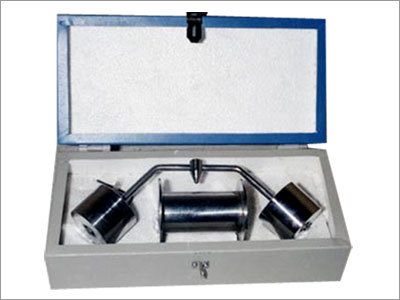
Tell us about your requirement

Price:
Quantity
Select Unit
- 50
- 100
- 200
- 250
- 500
- 1000+
Additional detail
Mobile number
Email

More Products in Hospital Equipments Category
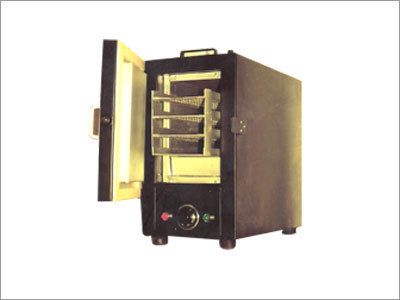
Portable Electrode Oven
Minimum Order Quantity : 1 Unit
Power : 165W
Shape : Cylindrical
Power Source : Electric
Application : Storage and Heating of Welding Electrodes
Use : Maintains Electrodes at Required Temperature
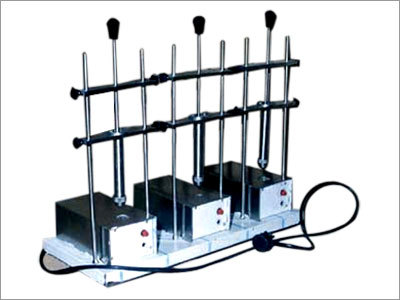
Rapid Oil Extraction
Minimum Order Quantity : 1 Unit
Power : 600 W
Shape : Rectangular
Power Source : Electric
Application : Oil Extraction from Seeds and Nuts
Use : Suitable for commercial and domestic oil extraction
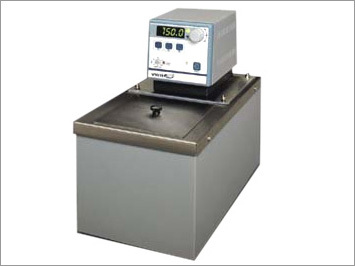
Fully Automatic Water Suspan
Minimum Order Quantity : 1 Unit
Power : 70 Watt
Shape : Rectangular
Power Source : Electric
Application : Automatic Water Serving/Suspension
Use : Industrial and Domestic Water Dispensing
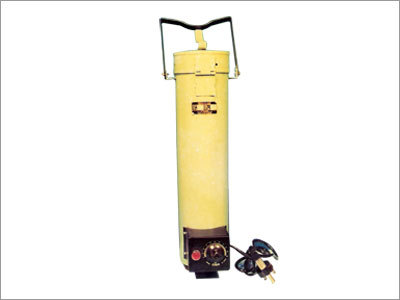
Electrode Oven
Minimum Order Quantity : 1 Unit
Power : 2 kW
Shape : Rectangular
Power Source : Electric
Application : Storage & Drying of Welding Electrodes
Use : Maintaining Electrodes at Preset Temperature

Address
GLOBAL CORPORATION
GST : 27AGZPP4774D1ZO
GST : 27AGZPP4774D1ZO
- A/9, Shukla Estate, Opposite Veena Dalvai Industrial Estate, Off. S.V. Road, Oshiwara,Mumbai - 400068, Maharashtra, India
- Phone :07971191522
- Send Inquiry
 Send Inquiry
 Send Inquiry
 Send SMS
 |
GLOBAL CORPORATION
All Rights Reserved.(Terms of Use) Developed and Managed by Infocom Network Private Limited. |
